Federal Reserve Holds Rate at 4.25% as Inflation Cools
The Federal Reserve recently held its benchmark interest rate at 4.25% as national inflation cooled to 2.4%, signaling a cautious approach to monetary policy amidst evolving economic conditions.
The recent announcement that the Federal Reserve Holds Benchmark Rate at 4.25% as National Inflation Cools to 2.4% has sent ripples through financial markets and households across the United States. What does this pivotal decision mean for your wallet, your investments, and the broader economic landscape? Let's delve into the intricacies of this move and its potential implications.
Understanding the Federal Reserve's Decision
The Federal Reserve, often referred to as 'the Fed,' plays a critical role in managing the U.S. economy through its monetary policy. Its primary tools include setting the federal funds rate, which influences everything from mortgage rates to credit card interest. The recent decision to maintain the benchmark rate at 4.25% reflects a careful balancing act, acknowledging both progress in combating inflation and ongoing economic uncertainties.
This decision is not made in a vacuum; it’s the result of extensive analysis of various economic indicators. The Fed's dual mandate is to achieve maximum employment and stable prices. When inflation is high, the Fed typically raises rates to cool down the economy. Conversely, during periods of economic slowdown, it might lower rates to stimulate growth. The current scenario presents a unique challenge, as inflation has shown signs of easing without a significant downturn in the labor market.
The role of the Federal Open Market Committee (FOMC)
- Policy Setting: The FOMC is the monetary policymaking body of the Federal Reserve System.
- Economic Assessment: Members regularly assess economic conditions, including employment, inflation, and economic growth.
- Rate Decisions: They vote on whether to raise, lower, or maintain the federal funds rate, influencing short-term interest rates.
The FOMC's statements provide crucial insights into their outlook. Their recent communication emphasized a data-dependent approach, suggesting that future decisions will hinge on how economic data evolves. This cautious stance aims to avoid both premature easing, which could reignite inflation, and excessive tightening, which could trigger a recession. The stability of the 4.25% rate reflects a belief that current policy is sufficient to guide inflation towards the target without stifling economic activity.
In essence, the Fed is navigating a complex economic environment, attempting to land the economy softly after a period of significant inflationary pressures. Their decision to hold rates steady is a testament to the progress made on inflation, while also acknowledging that the job is not entirely done. This sustained rate allows for further observation of how previous hikes have permeated the economy, giving policymakers more clarity before their next move.
National Inflation Cools to 2.4%: A Closer Look
The cooling of national inflation to 2.4% is a significant development, representing a substantial decline from its peak. This figure is particularly noteworthy because it approaches the Federal Reserve's long-term target of 2%. The inflation rate is measured by various indices, predominantly the Consumer Price Index (CPI) and the Personal Consumption Expenditures (PCE) price index, with the latter being the Fed's preferred gauge.
Several factors have contributed to this deceleration. Supply chain issues, which were a major driver of inflation during the pandemic, have largely resolved. Energy prices, though volatile, have generally stabilized or even decreased in recent months. Furthermore, the aggressive interest rate hikes implemented by the Fed over the past year have worked to dampen demand, thereby reducing price pressures across various sectors of the economy.
Key drivers behind cooling inflation
- Supply Chain Normalization: Improved global logistics and production have eased bottlenecks.
- Energy Price Stability: Fluctuations in oil and gas prices have become less extreme, contributing to overall price moderation.
- Monetary Policy Impact: Higher interest rates have reduced borrowing and spending, curbing demand-driven inflation.

While the overall inflation number is encouraging, it's important to look beyond the headline figure. Core inflation, which excludes volatile food and energy prices, often provides a clearer picture of underlying price trends. Although core inflation has also trended downwards, it may still remain slightly elevated compared to the overall rate, indicating persistent price pressures in certain service sectors.
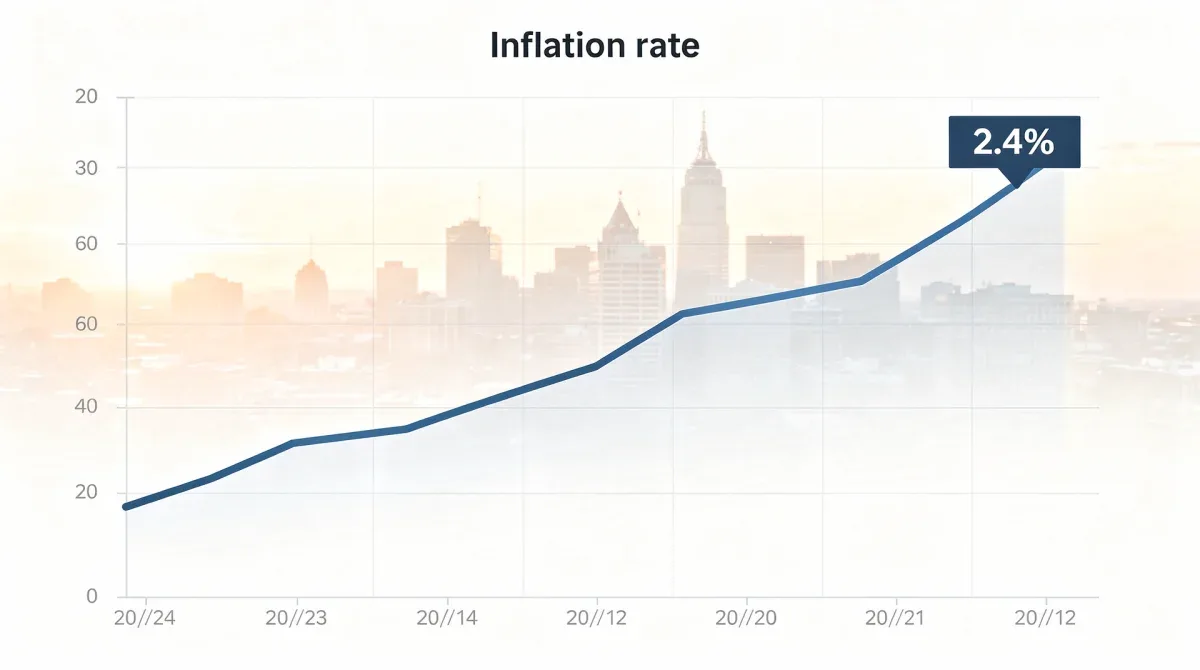
This cooling trend is a welcome relief for consumers, whose purchasing power has been eroded by rising prices. Lower inflation means that the cost of goods and services is increasing at a slower pace, providing a much-needed reprieve for household budgets. However, it does not mean that prices are falling; rather, they are simply rising less quickly. The Fed will continue to monitor these trends closely, ensuring that the downward trajectory of inflation is sustainable and not merely a temporary blip.
Impact on Consumers and Businesses
The Federal Reserve's decision to hold the benchmark rate at 4.25% has tangible implications for both consumers and businesses. For consumers, stable rates mean that borrowing costs for new loans, such as mortgages and auto loans, are likely to remain relatively consistent. Those with adjustable-rate mortgages or variable-rate credit cards might also see some stability in their monthly payments, though these are still significantly higher than a couple of years ago.
On the flip side, savers might continue to benefit from higher yields on savings accounts, certificates of deposit (CDs), and money market accounts. Banks typically pass on some of the higher federal funds rate to their depositors, offering more attractive returns. This can be a boon for individuals looking to grow their savings without taking on significant investment risk. However, it's crucial to shop around for the best rates, as offerings can vary widely among financial institutions.
Consumer financial considerations
- Mortgage Rates: New fixed-rate mortgages may see less volatility, while adjustable rates remain sensitive.
- Credit Card Debt: Variable APRs will likely stay elevated, emphasizing the importance of paying down high-interest debt.
- Savings Returns: Higher interest rates on savings accounts and CDs offer opportunities for increased passive income.
For businesses, particularly small and medium-sized enterprises (SMEs), stable interest rates provide a degree of predictability. Companies planning to expand, invest in new equipment, or manage their operational costs can better forecast their borrowing expenses. This stability can foster confidence and encourage investment, which is vital for economic growth and job creation. Larger corporations with access to capital markets may also find borrowing conditions more stable, though the overall cost of capital remains higher than in recent years.
The cooling inflation also benefits businesses by reducing input costs and making pricing strategies more manageable. When inflation is rampant, businesses face constant pressure to adjust prices, which can alienate customers and complicate long-term planning. A more stable inflationary environment allows businesses to operate with greater certainty, potentially leading to more consistent profit margins and fewer unexpected cost increases.
The Federal Reserve's Forward Guidance and Future Outlook
The concept of 'forward guidance' is a critical tool for the Federal Reserve. It involves communicating the central bank's outlook on the economy and the likely future path of monetary policy. By providing clear guidance, the Fed aims to influence market expectations, which in turn can impact long-term interest rates and economic behavior. The current forward guidance suggests a cautious, data-dependent approach, indicating that the Fed is not yet ready to declare victory over inflation.
Policymakers have repeatedly emphasized that they will continue to monitor incoming data, including inflation reports, employment figures, and broader economic activity, before making further adjustments to the federal funds rate. This implies that while the current hold is a positive sign, it does not necessarily preclude future rate hikes if inflation proves to be more persistent than anticipated, nor does it rule out rate cuts if economic conditions deteriorate significantly.
Factors influencing future Fed decisions
- Inflation Persistence: How quickly and sustainably inflation moves towards the 2% target.
- Labor Market Strength: The health of the job market, including unemployment rates and wage growth.
- Economic Growth: Overall GDP growth and other indicators of economic activity.
- Global Economic Conditions: International economic developments that could impact the U.S. economy.
The future outlook remains somewhat uncertain, but the current trajectory suggests a gradual return to more normalized economic conditions. The Fed's patience reflects a desire to avoid a 'boom-bust' cycle, aiming instead for a sustained period of stable prices and maximum employment. Market participants will be closely watching upcoming economic reports and FOMC meetings for any shifts in tone or policy direction.
Analysts generally anticipate that the Fed will maintain this holding pattern for at least a few more meetings, allowing the full effects of past rate hikes to ripple through the economy. Any future rate adjustments will likely be incremental, reflecting the Fed's commitment to precision in its monetary policy decisions. This measured approach is intended to provide stability and confidence in the long-term health of the U.S. economy.
Global Economic Context and Spillover Effects
The U.S. economy does not operate in isolation; it is deeply interconnected with the global economic landscape. The Federal Reserve's monetary policy decisions, particularly on interest rates, can have significant spillover effects on other countries and international financial markets. When the Fed raises rates, it often strengthens the U.S. dollar, making American goods more expensive for foreign buyers and imports cheaper for U.S. consumers.
Conversely, a stable or paused U.S. rate environment can provide a sense of calm for global markets. Many central banks around the world often look to the Fed's actions as a guide, especially those in emerging markets. A stable U.S. interest rate policy can alleviate pressure on these countries to raise their own rates, potentially preventing capital outflows and currency depreciation. This can contribute to greater global financial stability.

International implications of Fed policy
- Currency Valuation: U.S. dollar strength or weakness affects trade balances and global capital flows.
- Global Interest Rates: Other central banks may adjust their policies in response to Fed actions.
- Emerging Markets: Stability in U.S. rates can reduce financial volatility in developing economies.
The cooling of inflation in the U.S. also has international implications. If U.S. inflation continues its downward trend, it could signal a broader global deceleration in price pressures, especially if similar trends are observed in other major economies. This could lead to a more synchronized global monetary policy approach, where central banks can collectively focus on fostering sustainable growth without the immediate threat of runaway inflation.
However, geopolitical events and international trade dynamics continue to pose risks to this stability. Supply chain vulnerabilities, ongoing conflicts, and shifts in global demand can still impact inflation and economic growth worldwide. The Fed's decision to hold rates constant acknowledges these global complexities, providing a period of stability for international markets to adjust and respond.
Historical Precedents and Lessons Learned
Examining historical periods where the Federal Reserve has adjusted interest rates in response to inflation provides valuable context for the current situation. The 1970s, for instance, saw persistent high inflation, leading the Fed to implement aggressive rate hikes that eventually triggered recessions. This period taught policymakers the importance of decisive action against inflation, but also the delicate balance required to avoid economic contraction.
More recently, the post-2008 financial crisis era saw the Fed maintain exceptionally low-interest rates for an extended period to stimulate recovery. This era demonstrated the power of accommodative monetary policy, but also raised questions about the potential for asset bubbles and future inflationary pressures once the economy fully recovered. The current challenge of bringing inflation down from multi-decade highs without causing a severe recession is a testament to the lessons learned from these different historical contexts.
Key takeaways from past Fed cycles
- Inflation Control: Early and decisive action against inflation is crucial, but timing is everything.
- Economic Stimulus: Low rates can spur growth but carry risks of overheating and asset bubbles.
- Data Dependency: Monetary policy must adapt to evolving economic data, not rigid forecasts.
The current Fed leadership appears to be drawing from these historical lessons, opting for a cautious and incremental approach. Their willingness to pause rate hikes while inflation cools reflects a desire to assess the cumulative impact of previous actions, rather than reacting precipitously. This 'wait and see' strategy is a calculated risk, aiming to achieve a soft landing for the economy.
The goal is to avoid the policy errors of the past, whether it be allowing inflation to become entrenched or tightening too aggressively and causing an unnecessary recession. The current decision to hold rates steady is a reflection of this nuanced understanding of economic history and the complexities of modern monetary policy. It underscores the Fed's commitment to learning from the past to forge a more stable economic future.
| Key Point | Brief Description |
|---|---|
| Rate Hold | Federal Reserve maintains benchmark interest rate at 4.25%. |
| Inflation Cools | National inflation decreases to 2.4%, nearing Fed's 2% target. |
| Economic Impact | Stable rates affect mortgages, savings, and business investments. |
| Future Outlook | Fed remains data-dependent, signaling caution for future policy changes. |
Frequently Asked Questions About the Fed's Decision
Why did the Federal Reserve decide to hold the rate at 4.25%?▼The Federal Reserve held the rate to assess the full impact of previous rate hikes on the economy. With national inflation cooling to 2.4%, the Fed aims to achieve its 2% target without causing unnecessary economic contraction, taking a cautious and data-dependent approach to monetary policy.
What does cooling inflation to 2.4% mean for consumers?▼Cooling inflation means that the rate at which prices for goods and services are increasing has slowed down significantly. For consumers, this translates to less erosion of purchasing power, making everyday expenses more predictable and potentially easing household budgets over time.
How does the Fed's decision affect mortgage rates?▼While the federal funds rate doesn't directly set mortgage rates, it influences them. A stable benchmark rate at 4.25% suggests that new fixed-rate mortgages may experience less volatility, while adjustable-rate mortgages could see continued stability, albeit at higher levels than pre-hike periods.
Will the Federal Reserve cut rates soon?▼The Federal Reserve's forward guidance indicates a data-dependent stance. While inflation has cooled, the Fed is not rushing to cut rates. Any future adjustments will be based on sustained progress towards their 2% inflation target and continued strength in the labor market, making immediate cuts unlikely.
What is the significance of the 2% inflation target?▼The 2% inflation target is considered optimal for price stability and healthy economic growth. It provides a buffer against deflation while avoiding the negative effects of high inflation. Achieving this target sustainably is central to the Federal Reserve's mandate for stable prices.
Conclusion
The Federal Reserve's decision to hold its benchmark rate at 4.25% while national inflation cools to 2.4% marks a pivotal moment in the current economic cycle. This cautious approach reflects both the significant progress made in reining in inflation and the ongoing need for vigilance. For consumers and businesses alike, this period of rate stability offers a chance to adapt and plan, albeit within an environment shaped by higher borrowing costs than previously. The Fed's commitment to a data-dependent strategy underscores the dynamic nature of monetary policy, promising continued adjustments as economic indicators evolve. As we move forward, the interplay between inflation, employment, and interest rates will remain a central focus, guiding the nation towards a more stable and predictable financial future.
