CFPB Enforces New $8 Credit Card Late Fee Cap: What You Need to Know
The CFPB has enforced a new $8 credit card late fee cap following a federal appeals court ruling, significantly altering how credit card companies can charge for overdue payments and aiming to protect consumers from excessive fees.
The recent announcement that the CFPB Enforces New $8 Credit Card Late Fee Cap Following Federal Appeals Court Ruling marks a pivotal moment for millions of American consumers. This significant regulatory shift promises to reshape the landscape of credit card fees, bringing much-needed relief and clarity to financial obligations.
Understanding the CFPB's Role in Consumer Protection
The Consumer Financial Protection Bureau (CFPB) stands as a cornerstone of financial oversight in the United States, charged with protecting consumers in the financial marketplace. Its mission is broad, encompassing everything from mortgages and credit cards to student loans and bank accounts. The CFPB's enforcement actions and regulatory initiatives are designed to ensure fair, transparent, and competitive financial practices, safeguarding individuals against predatory lending and excessive charges. This includes setting limits on fees that, while seemingly minor individually, can accumulate substantially and disproportionately affect vulnerable populations.
The Bureau's authority stems from the Dodd-Frank Wall Street Reform and Consumer Protection Act of 2010, enacted in the wake of the 2008 financial crisis. This legislation empowered the CFPB to write and enforce rules, examine financial institutions, collect and respond to consumer complaints, and promote financial education. Its independence allows it to act decisively in areas where consumer interests might otherwise be overlooked or overshadowed by industry lobbying. The recent ruling on credit card late fees is a testament to the CFPB's ongoing commitment to these core principles, directly impacting the financial well-being of countless Americans.
Historical Context of Credit Card Late Fees
For decades, credit card late fees have been a significant revenue stream for issuers, often exceeding the actual cost incurred by the companies for processing late payments. These fees were typically set at levels that, while seemingly small on a per-instance basis, could quickly spiral for consumers facing financial hardship. Prior to this new cap, late fees could reach up to $41, a figure that many consumer advocates argued was punitive and exploitative. The practice has long been a point of contention, with critics arguing that such high fees disproportionately affect low-income individuals and those living paycheck to paycheck, creating a cycle of debt that is difficult to break.
- Revenue Generation: Late fees contributed billions annually to credit card companies' profits.
- Disproportionate Impact: Lower-income consumers were often hit hardest by high late fees.
- Regulatory Scrutiny: The CFPB has consistently highlighted the issue of excessive fees.
The historical context reveals a gradual tightening of regulations around credit card practices, but late fees remained a thorny issue. This new enforcement by the CFPB, therefore, represents a culmination of years of advocacy and regulatory efforts aimed at recalibrating the balance between issuer profitability and consumer protection. It signifies a shift towards a more equitable financial ecosystem where fees are more closely aligned with actual costs, rather than serving as substantial profit centers.
The Federal Appeals Court Ruling: A Legal Turning Point
The enforcement of the CFPB $8 Credit Card Late Fee Cap did not happen in a vacuum; it was directly influenced by a crucial federal appeals court ruling. This legal decision played a pivotal role in solidifying the CFPB's authority to implement such a significant change. The path to this ruling was fraught with legal challenges from industry groups that argued the CFPB overstepped its bounds or that the proposed cap was arbitrary. These challenges often focused on interpretations of existing legislation and the economic impact on credit card issuers.
The legal battle highlighted the ongoing tension between regulatory bodies seeking to protect consumers and financial institutions aiming to preserve their revenue streams. The appeals court, after reviewing the arguments, ultimately sided with the CFPB, affirming its power to regulate these fees under the Credit Card Accountability Responsibility and Disclosure (CARD) Act of 2009. This ruling was not merely a technicality; it was a strong endorsement of the CFPB's interpretation of its mandate to prevent unfair and abusive practices in the financial sector.

Key Aspects of the Court's Decision
The federal appeals court's decision hinged on several critical points, reinforcing the CFPB's framework for the late fee cap. The court examined the methodology used by the CFPB to determine the $8 limit, which was based on extensive research into the actual costs incurred by card issuers for late payments. This evidence-based approach was crucial in counteracting claims that the cap was arbitrary or lacked economic justification. The court also considered the broader consumer protection goals of the CARD Act, recognizing that excessive late fees could trap consumers in a cycle of debt.
- Evidence-Based Methodology: The CFPB's research on actual costs was a deciding factor.
- CARD Act Interpretation: The court affirmed the CFPB's authority under the 2009 Act.
- Consumer Welfare: The ruling emphasized the importance of preventing abusive practices.
This ruling effectively cleared the legal hurdles that had delayed the implementation of the new cap, paving the way for its immediate enforcement. It sends a clear message to financial institutions about the limits of their ability to levy fees that do not reflect genuine operational costs. The decision underscores the judiciary's role in upholding regulatory frameworks designed to foster a more equitable financial marketplace for all Americans, aligning with the CFPB's core mission.
The $8 Credit Card Late Fee Cap: What It Means for Consumers
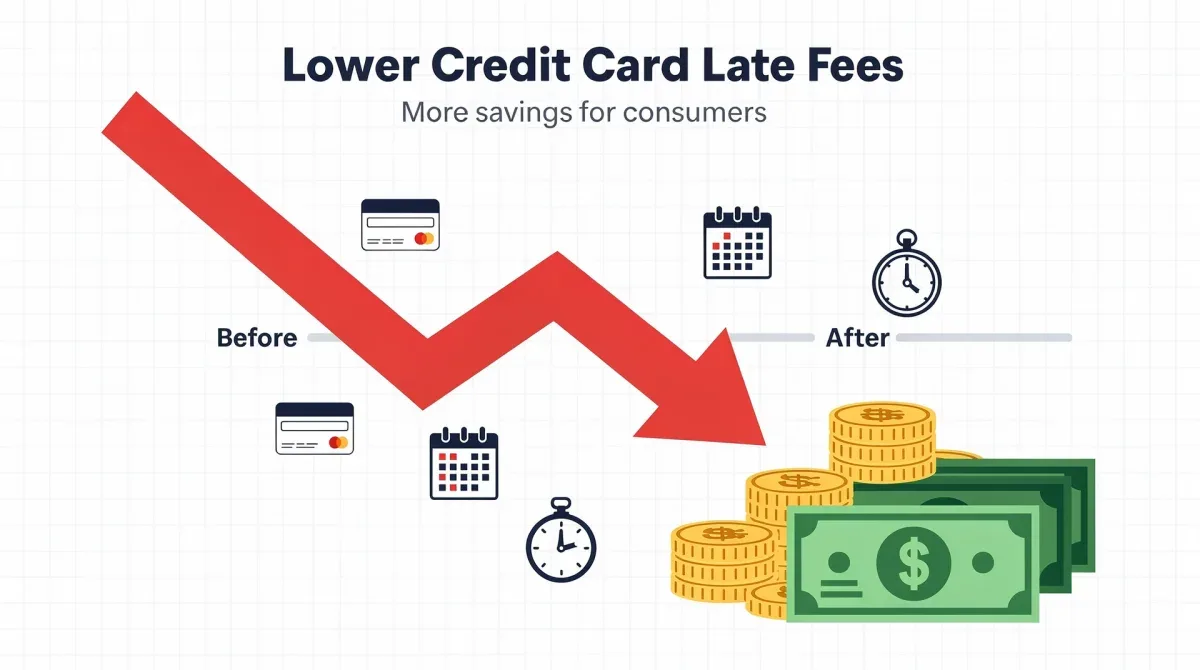
For the average American consumer, the implementation of the CFPB Enforces New $8 Credit Card Late Fee Cap Following Federal Appeals Court Ruling translates directly into tangible financial relief. Previously, a single late payment could trigger fees ranging from $30 to $41, a significant burden for many households. With the new cap, this maximum fee is drastically reduced to $8, representing a potential saving of over $30 per late payment. This change is particularly impactful for individuals who occasionally miss a payment due to unforeseen circumstances or temporary financial difficulties.
The reduction in late fees also has a broader psychological effect, alleviating some of the stress associated with managing credit card debt. Knowing that a minor oversight won't result in a substantial penalty can help consumers maintain better financial health and reduce the likelihood of falling into a debt spiral. This measure aligns with the CFPB's long-standing efforts to make financial products fairer and more transparent, fostering an environment where consumers are less likely to be penalized excessively for minor infractions.
Direct Financial Impact and Savings
The most immediate and obvious benefit of the $8 late fee cap is the direct financial savings for consumers. Consider a scenario where a consumer typically incurs two late fees per year. Under the old system, this could amount to $60-$82 annually. With the new cap, the same two late fees would cost only $16, saving the consumer between $44 and $66 each year. While these individual savings might seem modest, aggregated across millions of consumers, the total impact is substantial, potentially freeing up billions of dollars that can be redirected to other essential expenses or savings.
- Reduced Burden: Significantly lower penalties for missed payments.
- Increased Disposable Income: More money available for other needs or savings.
- Fairer Practices: Fees are now more aligned with administrative costs.
Furthermore, this cap may encourage some consumers to re-evaluate their payment habits. While avoiding late payments altogether remains the best strategy, the reduced penalty means that an occasional slip-up is less financially catastrophic. This policy move is a clear win for consumer advocacy, demonstrating how targeted regulation can lead to meaningful improvements in personal finance for a vast segment of the population, especially those who are most susceptible to the impact of high fees.
Impact on Credit Card Issuers and the Financial Industry
While the CFPB Enforces New $8 Credit Card Late Fee Cap Following Federal Appeals Court Ruling is a boon for consumers, it naturally presents significant implications for credit card issuers and the broader financial industry. Late fees have historically been a lucrative revenue stream for banks, contributing billions to their annual profits. The reduction of this cap to $8 will undoubtedly lead to a substantial decrease in this particular income source. This forces issuers to re-evaluate their business models, potentially seeking alternative revenue streams or adjusting other aspects of their operations.
Many financial institutions have already expressed concerns about the impact on their profitability and their ability to cover the administrative costs associated with late payments. Some have argued that higher fees serve as a necessary deterrent for late payments, encouraging timely financial behavior. However, the CFPB's stance, reinforced by the court ruling, is that fees should reflect actual costs, not act as punitive measures or significant profit centers. This shift will likely spur innovation in how issuers manage customer accounts and encourage on-time payments, perhaps through more proactive communication or flexible payment options.
Potential Industry Responses and Adjustments
Credit card issuers are not passive observers in this regulatory change; they are dynamic entities that will adapt to the new environment. One potential response could be an increased focus on other types of fees, such as annual fees, balance transfer fees, or cash advance fees, to offset the lost revenue from late payments. However, any such adjustments would likely face scrutiny from the CFPB and consumer advocacy groups, who are vigilant about new forms of excessive charges.

Another likely outcome is a greater emphasis on customer retention and loyalty programs, as issuers compete more fiercely for consumers who are now less burdened by punitive fees. They might also invest more in technology to help customers manage their payments more effectively, offering reminders, auto-pay options, and personalized financial planning tools. The goal would be to reduce late payments through prevention rather than penalization.
- Revenue Diversification: Issuers may explore other fee structures or services.
- Enhanced Customer Service: Focus on tools to prevent late payments.
- Increased Competition: Banks might compete more aggressively for consumers.
Ultimately, this regulation could lead to a healthier, more competitive credit card market where value is derived from excellent service and innovative products rather than from punitive fees. While the initial adjustment period might be challenging for some institutions, the long-term outcome could be a more sustainable and consumer-friendly financial ecosystem.
The Role of the CARD Act of 2009 in Current Regulations
The Credit Card Accountability Responsibility and Disclosure (CARD) Act of 2009 is a foundational piece of legislation that continues to shape credit card regulations, including the recent action where the CFPB Enforces New $8 Credit Card Late Fee Cap Following Federal Appeals Court Ruling. Enacted in the aftermath of the 2008 financial crisis, the CARD Act aimed to establish fair and transparent practices for credit card issuers, protecting consumers from deceptive practices and excessive fees. It introduced significant reforms, such as requiring clear disclosures of terms and conditions, restricting universal default clauses, and limiting rate increases on existing balances.
Crucially, the CARD Act also empowered the Federal Reserve Board and, subsequently, the CFPB, to regulate penalty fees, ensuring they are reasonable and proportional to the cost incurred by the issuer. This specific provision is what the CFPB leveraged to propose and ultimately enforce the $8 late fee cap. The Act’s foresight in granting regulatory bodies the flexibility to adapt to market conditions and address emerging consumer protection issues has proven vital in the ongoing evolution of financial oversight. Without the CARD Act’s framework, the CFPB would have faced a much more challenging legal and regulatory landscape in implementing such a widespread change.
Key Provisions and Their Lasting Impact
Several key provisions of the CARD Act have had a lasting impact, providing the legal backbone for subsequent regulatory actions like the late fee cap. These provisions were designed to address some of the most egregious practices prevalent in the credit card industry prior to 2009. For example, the Act established limits on when interest rates could be raised, requiring 45 days' notice for any changes to terms and conditions. It also mandated that payments be applied to the highest interest rate balances first, helping consumers pay down debt more efficiently.
- Penalty Fee Limitations: Empowered regulators to ensure fees are reasonable.
- Transparency Requirements: Mandated clear disclosure of terms and conditions.
- Payment Allocation Rules: Ensured payments are applied to higher interest balances first.
The CARD Act also introduced protections for young consumers, requiring co-signers or proof of independent income for those under 21, and limited credit card solicitations on college campuses. These measures collectively aimed to create a fairer and more transparent credit card market. The recent enforcement of the $8 late fee cap is a direct continuation of the spirit and letter of the CARD Act, demonstrating its enduring relevance and effectiveness in safeguarding consumer interests in the dynamic financial landscape.
Future Outlook: What's Next for Credit Card Regulations?
The decision where the CFPB Enforces New $8 Credit Card Late Fee Cap Following Federal Appeals Court Ruling is a clear indication that the regulatory environment for financial services is continuously evolving. This landmark ruling suggests a broader trend towards increased consumer protection and a closer scrutiny of fees and charges across various financial products. While the immediate focus is on credit card late fees, this action could set a precedent for future regulatory interventions in other areas of consumer finance. The CFPB's successful defense of its authority in court reinforces its position as a powerful advocate for consumers, potentially emboldening it to tackle other contentious issues.
We can anticipate that financial institutions will closely monitor future CFPB actions and adapt their strategies accordingly. This might include a renewed focus on compliance, an overhaul of existing fee structures, and a greater emphasis on providing value-added services to attract and retain customers. The regulatory landscape is dynamic, and both consumers and financial entities need to stay informed about these changes to navigate the financial world effectively.
Potential Areas for Future Regulatory Scrutiny
Beyond late fees, several other areas within credit card operations and broader consumer finance could come under increased regulatory scrutiny. Over-limit fees, foreign transaction fees, and even the methodology for calculating annual percentage rates (APRs) could be potential targets for future CFPB initiatives. The Bureau might also explore the transparency of rewards programs and the fairness of terms for promotional interest rates, ensuring that consumers fully understand the implications of these offerings.
Furthermore, as technology continues to transform financial services, new challenges and opportunities for consumer protection will emerge. Digital payment platforms, cryptocurrency, and artificial intelligence in lending all present novel regulatory considerations. The CFPB will likely continue to adapt its approach to address these innovations, ensuring that consumer safeguards keep pace with technological advancements.
- Other Penalty Fees: Over-limit fees and foreign transaction fees could be next.
- APR Transparency: Scrutiny over interest rate calculation and disclosure.
- Emerging Technologies: Regulation of digital payments and crypto in consumer finance.
The future of credit card regulation points towards a sustained effort to create a fairer, more transparent, and consumer-centric financial system. This involves not only setting limits on fees but also promoting financial literacy and ensuring that consumers have access to clear, understandable information about their financial products. The CFPB's recent action is a significant step in this ongoing journey, promising continued vigilance and advocacy for the American consumer.
Navigating Your Finances in the New Regulatory Landscape
With the CFPB Enforces New $8 Credit Card Late Fee Cap Following Federal Appeals Court Ruling, consumers are now operating within a slightly altered financial landscape. While the reduction in late fees is a definite positive, it’s crucial for individuals to understand how to best navigate these changes and continue to manage their credit responsibly. The cap offers a safety net, but it doesn't eliminate the importance of timely payments and prudent financial planning. Consumers should view this as an opportunity to reinforce good habits and potentially save money, rather than a license to be less diligent.
Effective financial management in this new environment still hinges on proactive strategies. This includes regular monitoring of credit card statements, setting up payment reminders, and understanding the terms and conditions of all financial products. While the penalty for a late payment is now lower, avoiding such fees altogether remains the optimal approach for maintaining a healthy credit score and minimizing overall costs. The regulatory change provides a buffer, but personal responsibility remains paramount.
Best Practices for Credit Card Management
To maximize the benefits of the new late fee cap and maintain strong financial health, consumers should adopt several best practices for credit card management. Firstly, always strive to pay your credit card bill on time, or even a few days before the due date, to avoid any last-minute issues. Setting up automatic payments for at least the minimum amount can be a highly effective way to prevent accidental late payments, though paying the full balance whenever possible is always recommended to avoid interest charges.
- Automate Payments: Set up auto-pay for minimums or full balances.
- Monitor Statements: Regularly check for errors or unauthorized charges.
- Understand Terms: Be aware of your card's APR, fees, and rewards structure.
- Budget Effectively: Align spending with income to avoid overspending.
Secondly, regularly review your credit card statements for any discrepancies or unauthorized charges. Understanding your card's terms and conditions, including its APR, any annual fees, and the details of its rewards program, is also vital. Finally, creating and sticking to a personal budget can help prevent overspending and ensure that you have sufficient funds to cover your credit card payments. By combining the protection offered by the CFPB's new cap with sound financial practices, consumers can achieve greater stability and control over their credit card debt, leading to improved financial well-being in the long run.
| Key Point | Brief Description |
|---|---|
| CFPB Late Fee Cap | The Consumer Financial Protection Bureau has enforced a new $8 cap on credit card late fees. |
| Appeals Court Ruling | This enforcement follows a federal appeals court ruling that affirmed the CFPB's authority. |
| Consumer Impact | Consumers will see significant savings, reducing the financial burden of missed payments. |
| Industry Adjustments | Credit card issuers are expected to adapt business models and seek new revenue streams. |
Frequently Asked Questions About the New Late Fee Cap
What is the new credit card late fee cap?▼The new credit card late fee cap, enforced by the CFPB, limits most credit card late fees to $8. This is a significant reduction from previous fees, which could be as high as $41, aiming to provide substantial financial relief to consumers and prevent excessive charges for overdue payments.
Why did the CFPB enforce this new cap?▼The CFPB enforced the $8 cap to protect consumers from what it deemed excessive and punitive late fees. Following a federal appeals court ruling, the Bureau's authority to regulate these fees was affirmed, allowing it to align fees more closely with the actual administrative costs incurred by credit card issuers.
How does this cap affect consumers?▼For consumers, the cap means significantly lower penalties for missed credit card payments, potentially saving them over $30 per late fee. This can reduce financial stress, prevent debt spirals, and free up disposable income that would otherwise go towards exorbitant charges.
What was the role of the federal appeals court?▼The federal appeals court played a crucial role by upholding the CFPB's authority to set limits on credit card late fees. Its ruling dismissed challenges from industry groups, solidifying the legal basis for the $8 cap and allowing for its immediate enforcement across the United States.
Will this change impact my credit score?▼While the late fee itself is reduced, making a late payment can still negatively impact your credit score, especially if it's reported to credit bureaus. The cap primarily reduces the financial penalty, but timely payments remain essential for maintaining a healthy credit history and score.
Conclusion
The enforcement of the CFPB Enforces New $8 Credit Card Late Fee Cap Following Federal Appeals Court Ruling represents a landmark achievement in consumer protection. This regulatory shift, born from years of advocacy and legal battles, significantly reduces the financial burden on consumers for missed payments, fostering a fairer and more transparent credit card market. While posing new challenges for credit card issuers, it ultimately paves the way for a financial ecosystem where fees are more aligned with actual costs and consumer well-being is prioritized. For American consumers, this means greater financial stability and an opportunity to manage credit more effectively with less fear of punitive charges. Staying informed and practicing diligent financial habits remain key to leveraging these new protections.
